

How Much Money Does A Taco Bell Franchise Make
Vetted Biz is the leading platform for accessible and analytical data on franchises and businesses available in the U.S. Our research team has reviewed over 1,500 franchises and knows the key facts and data that signal a successful franchise A franchise is when a business (franchisor) allows a party (franchisee) to acquire its know-how, procedures, processes, trademarks, intellectual property, use of its business model, brand and rights to sell its products and services. The franchisee signs a contract (franchise agreement) with the franchisor to acquire the franchise and generally has a territory granted to operate. What is a Franchise?… More system. Upon extensive review using a number of internet research tools, our team was able to compile a short list of the "Top 20 Most Popular Franchises in the United States." In the article below, we review the business model proposed by one of these 20 franchises:Taco Bell franchise, as well as the requirements that encompass its franchise application process.
Taco Bell Franchise
Taco Bell opened its first store in Downey, California in 1962 after its founder, Glen Bell, sold his former Taco store to his existing business partners. After having seen the success a business could make in selling tacos as the pilot dish in their menu, Bell decided to seek a larger challenge and instead developed the business model in place across all stores to this day that involves serving a variety of Mexican and Tex-Mex foods such as tacos, burritos and nachos.
Franchising began two years after Bell opened his first Taco Bell store, when Kermit Becky – a retired L.A. policeman – opened his own Taco Bell in Torrance, CA. Today, Taco Bell is now a subsidiary of Yum! Brands and has over 6,000 franchised stores in the US and another 500 in international markets. Taco Bell is currently headquartered in Irvine, California and is run by its CEO Mark King who previously served as the president of Adidas North America and CEO of TaylorMade.
Taco Bell History
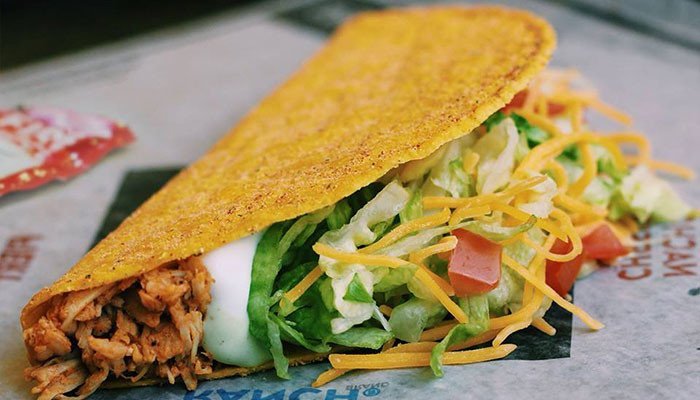
Taco Bell franchise is a fast food Mexican restaurant concept that has operated units since the 1960s. They sell a variety of "Mexican inspired food", from tacos, burritos, quesadillas, nachos, and other value menu items. Taco Bell Franchisor, LLC was organized as a company in Delaware in 2016. In turn, they are owned by Taco Bell Corporation, which was organized in California in 1962.
Taco Bell Franchisor, or TBF, has been franchising units since 1964, making them one of the oldest franchises in the United States. The Taco Bell brand is owned by YUM! Brands Inc., an American fast food corporation that owns other famous franchises like Pizza Hut and KFC.
The origins of Taco Bell can be traced back to their founder Glen Bell. Who opened his own hot dog stand in 1948. After seeing long lines at a neighboring Mexican restaurant, he was inspired to learn how to make tacos for himself. And after undergoing several name changes, he settled on Taco Bell. Today, the headquarters of Taco Bell are found in Irvine, California, and their current standing CEO is Mark King.
The following data was taken from both the Taco Bell 2020 FDD as well as the Taco Bell Express 2021 FDD. Although both fall under the umbrella of the Taco Bell Corporation, due to their many structural differences they are considered as two separate franchise A franchise is when a business (franchisor) allows a party (franchisee) to acquire its know-how, procedures, processes, trademarks, intellectual property, use of its business model, brand and rights to sell its products and services. The franchisee signs a contract (franchise agreement) with the franchisor to acquire the franchise and generally has a territory granted to operate. What is a Franchise?… More entities.
Taco Bell Franchise Business Model
There are four different types of Taco Bell franchise A franchise is when a business (franchisor) allows a party (franchisee) to acquire its know-how, procedures, processes, trademarks, intellectual property, use of its business model, brand and rights to sell its products and services. The franchisee signs a contract (franchise agreement) with the franchisor to acquire the franchise and generally has a territory granted to operate. What is a Franchise?… More that one can invest in. They include elaborate facilities with multiple facets as well as more compact spaces with limited operating ability.
"Traditional Units" the largest types of Taco Bell franchise. Coming with their own kitchen, counter, sit-down area, and usually their own drive-thru.
"In-line Units" have the same features as traditional units. Although they may or may not have their own drive-thru. Those with a drive-thru are referred to as "End-caps" . However, unlike traditional free standing units they are built for more compact areas with high traffic, like busy street corners.
"Power Pumpers" have the same features as the above two units. But they are distinct because they share facilities with a gas and convenience store.
"Taco Bell Express" are Taco Bell franchise units that are far less elaborate than the three units mentioned above. Accompanied by a limited section of menu items. They are frequently referred to as "Custom Facades". They are often considered separately as a franchise and as a result have their own franchise disclosure document.
Taco Bell Franchise Cost
The first factor to consider when interested in investing in a Taco Bell franchise are the financial requirements accompanying this investment opportunity. The total investment amount to establish a Taco Bell franchise ranges from $525,524 to $2,956,765. Including the company's franchise fee that ranges from $25,000 to $45,000 and excluding any land or lease costs.
Once the store has been built and operations begin, franchisees are then expected to pay the parent company a royalty fee of 5.5% on gross sales The total amount in dollars made in the business before expenses are deducted. See also Gross Revenue. . And a marketing fee of 4.25% on gross sales in exchange for the marketing services provided by the franchisor. The franchisor is particularly looking for experienced candidates who have enough capital to support a multi-unit franchise development. That said, the minimum net worth Value of all the non-financial and financial assets of a business buyer. There is usually a minimum net worth requirement to qualify as a franchisee and for bank financing. required to own a Taco Bell franchise is $1,500,000. And the applicant must have liquid assets totaling at least $750,000.
The following numbers are broken down by the different types of Taco Bell franchises:
The initial franchise fee for a "Traditional Units" and "Power Pumpers" franchise is $45,000 .
The initial franchise fee for an "In-lines" or "End-cap" restaurant is $25,000 .
The initial franchise fee for a Taco Bell Express "Custom Facades" is $22,500 .
The total estimated initial investment The amount of funds necessary to begin operations of a business or franchise including the first three months of operation. for a "Traditional Units" and "Power Pumpers" franchise is $1,258,100 to $3,049,100 .
The total estimated initial investment for an "In-lines" and "End-caps" franchise is $570,600 to $1,354,100 .
The total estimated initial investment for an Taco Bell Express "Custom Facades" franchise is $252,500 to $590,100 .
The total estimated initial investment for a Taco Bell Express "Custom Facades" franchise is $252,500 to $590,100 .
Additional Cost Breakdown
| Traditional Units and Power Pumpers | In-lines and End-Caps | |
|---|---|---|
| Background Check Fee | $350-600 per person | $350-600 per person |
| First Unit Construction Services | $ 27,250 | $ 22,250 to 27,250 |
| Optional Real Estate Services | $0 to $37,250 | $0 to $37,250 |
| Permits, Licenses, Security Deposits | $74,000 | $74,000 |
| Real Property | $175,000 to $1,400,000 | $20,000 to $75,000 |
| Building/Site Construction | $534,500 to $1,000,000 | $177,000 to $650,000 |
| Equipment/Signage//Decor/POS | $350,000 to $390,000 | $200,000 to $390,000 |
| Initial Inventory The value of the total finished and unfinished goods and materials the business holds for future sale. | $7,000 to $10,000 | $7,000 to $10,000 |
| Grand Opening Expense | $ 5,000 | $ 5,000 |
| Additional Funds – 3 months | $40,000 to $60,000 | $40,000 to $60,000 |
| Taco Bell Express (Custom Facades) | |
|---|---|
| Background Check Fee | $350-600 per person |
| First Unit Design Services Fee | $ 2,000 to $5,000 |
| Land – First Month's Rent | $2,100 – $4,500 |
| Architectural Fees | $1,500 to $25,000 |
| Equipment Start-Up | $1,000 to $10,000 |
| Equipment and Decor | $175,000 to $230,000 |
| Buildout and Construction | $25,000 to $200,000 |
| Signs | $1,000 to $14,000 |
| Shipping and Tax | $1,600 to $15,000 |
| Cash Control Systems | $7,000 to $25,000 |
| Deposits, Business Licenses, and Permits | $500 to $10,000 |
| Initial Inventory | $3,000 to $8,500 |
| Additional Funds (3 months) | $10,000 to $20,000 |
Ongoing Costs and Fees
The following covers costs/fees that are intrinsic to the operation of a Taco Bell franchise. Meaning that they go beyond the initial investment and are paid on a repeating basis. This section includes such fees like royalties Fees paid by a franchisee to their franchisor in order to operate a franchise location. They are usually on a weekly or monthly basis. More and marketing fees.
Taco Bell Traditional
The period franchise fee for a traditional, Power Pumpers, and in-lines Taco Bell franchise is 5.5% of gross sales.
The period marketing fee for a traditional, Power Pumpers, and in-lines Taco Bell franchise is 4.25% of gross sales.
Taco Bell Express
The royalty fee for a Taco Bell Express franchise is 10% of gross sales.
The marketing fee for a Taco Bell Express franchise is 5.50% of gross sales.

How much do Taco Bell franchise A franchise is when a business (franchisor) allows a party (franchisee) to acquire its know-how, procedures, processes, trademarks, intellectual property, use of its business model, brand and rights to sell its products and services. The franchisee signs a contract (franchise agreement) with the franchisor to acquire the franchise and generally has a territory granted to operate. What is a Franchise?… More owners make?
According to their 2020 FDD, Taco Bell does not disclose the financial performance of their franchises in their Item 19. However, Taco Bell does disclose their financial statements, and while the financial performances of specific units cannot be determined, much about their prospective profitability can.
Statement of Cash Flows (thousands of dollars)
| Fiscal Year Ended | |||
|---|---|---|---|
| 2019 | 2018 | 2017 | |
| Cash flows from operating activities | |||
| Net income | $ 320,872 | $ 237,506 | $ 173,109 |
| Adjustments to reconcile net income to net cash provided by (used in) operating activities | |||
| Non-cash distributions | (305,429) | (240,296) | (172,220) |
| Provision for doubtful accounts | 23 | 146 | 4 |
| Net change in operating assets and liabilities | |||
| (Increase) in Accounts receivables, net | (6,273) | (6,271) | (6,692) |
| (Increase) in Franchise incentives | (18,920) | (3,312) | —- |
| (Increase)/Decrease in Due from affiliates | (876) | 1,159 | 2,780 |
| Increase in Due to affiliates | 922 | 177 | 915 |
| Increase in Deferred franchise fees | 9,642 | 10,927 | 2,102 |
| Cash provided by (used in) operating activities | (39) | 36 | (2) |
| Cash flows provided by investing activities | —- | —- | —- |
| Cash flows provided by financing activities | |||
| Cash contribution from members | —- | 8,861 | 10,305 |
| Cash provided by financing activities | —- | 8,861 | 10,305 |
| Net increase (decrease) in restricted cash and cash equivalents | (39) | 8,897 | 10,303 |
| Restricted Cash and Cash Equivalents – Beginning of Year | 34,205 | 25,308 | 15,005 |
| Restricted Cash and Cash Equivalents – End of Year | $ 34,166 | $ 34,205 | $ 25,308 |
Statement of Income (thousands of dollars)
| Fiscal Year Ended | |||
|---|---|---|---|
| 2019 | 2018 | 2017 | |
| Revenues | |||
| Franchise and license fees | $ 269,871 | $ 180,727 | $ 98,709 |
| Royalties Fees paid by a franchisee to their franchisor in order to operate a franchise location. They are usually on a weekly or monthly basis. More from affiliates | 50,390 | 56,675 | 74,392 |
| Total Revenues | 320,261 | 237,402 | 173,101 |
| Costs and expenses | |||
| Bad debt expense | 23 | 146 | 4 |
| Total costs and expenses | 23 | 146 | 4 |
| Operating profit | 320,238 | 237,256 | 173,097 |
| Interest A payment from a borrower or deposit-taking financial institution to a lender or depositor of an amount above repayment of the principal sum, at a particular rate. In Vetted Biz, it is typically the additional rate of a loan a business buyer would pay off over time to borrow in purchasing a business. Income | 634 | 250 | 12 |
| Net income | $ 320,872 | $ 237,506 | $ 173,109 |
Taco Bell provides limited versions of their financial statements in their FDD. And they are less detailed and extensive compared to the financial statements of comparable franchises.
In 2019, Taco Bell franchise made over $320 million in revenue. Almost $100 million more than the previous year. The majority of their revenue came from franchise and license fees. While a small portion came from royalties from their affiliates. One interesting thing to note is that Taco Bell was able to dramatically decrease their costs and expenses from 2018, from $146,000 to $23,000. In fact, their loss from costs and expenses is made up by interest income, which amounted to over $634,000 in 2019.
Key Insights
So how does Taco Bell's revenue compare to other contenders in the Food and Beverage industry? Despite the fact that they are one of the oldest franchisors, their revenue is surprisingly small compared to other major brands. For example, in our most recent analyses, we discovered that total sales The total amount in dollars made in the business before expenses are deducted. See also Gross Revenue. revenue for Krispy Kreme was over $1 billion in revenue. While for Starbucks their revenue was over $26 billion.
What about other fast food franchise concepts? In 2019, McDonalds made over $5 billion in revenue. While Papa John's made over $650 million in revenue. Another successful company in the industry, Domino's Pizza, made over $14 billion in revenue in 2019.
Despite these low numbers, it is impressive that Taco Bell franchise remains a profitable When the earnings in a given period of time is more than the expenses in a business. business. Although they have revealed limited financial information, from what has been released Taco Bell has remarkably low costs and expenses. However, this does NOT necessarily mean that the financial success of Taco Bell is true for individual franchises. In fact, because Taco Bell does not allow financial representations to be made in regards to the performances of individual franchises, it cannot be known for sure how well franchisees will do with an investment in a Taco Bell establishment.
Although Taco Bell may have a relatively high net income, much of their income is not liquid, as shown in their cash flows statement. As a matter of fact, the $320 million that Taco Bell ended up with as net income amounts to about $34 million in cash.

Taco Bell franchise: How many have opened/closed?
The vast majority of Taco Bell outlets are franchised. And as of 2019, franchised outlets made up 93% of total existing Taco Bell units. The same trend is true for Taco Bell Express units. And at the end of 2020 they made up 97% of total existing Taco Bell units.
The following data points are true for traditional, Power Pumpers, and In-Line Taco Bell units, and are taken from Taco Bell's 2020 FDD:
In 2017, Taco Bell opened 468 units and closed down 38 units for a net addition of 430 franchises and a total of 6,117 existing franchises at the end of the year.
In 2018, Taco Bell opened 379 units and closed down 50 units for a net addition of 329 franchises and a total of 6,446 existing franchises at the end of the year.
In 2019, Taco Bell opened 227 units and closed down 51 units for a net addition of 176 franchises and a total of 6,622 existing franchises at the end of the year.
Growth Rate Growth Rate The Growth Rate is the percentage change of total franchise units from one year to the next. A higher Growth Rate signifies an expanding franchise system. More
Overall, while Taco Bell has a very strong growth rate for their franchises, this growth rate has been slowly yet steadily declining for the past three years. However, there were more projected new outlets for 2020 at 214 new outlets, compared to 2019. At the same time, Taco Bell has been closing more outlets over the years, but not by a dramatic increase.
The following data points are in reference to Taco Bell Express (Custom Facade) units. In their 2021 FDD, these units are referred to as "licensed" units:
In 2018, Taco Bell Express opened 4 units and closed down 43 units for a net decrease of 39 units, leaving 359 units at the end of the year.
In 2019, Taco Bell Express opened 5 units and closed down 40 units for a net decrease of 35 units, leaving 324 units at the end of the year.
In 2020, Taco Bell Express opened 10 units and closed down 76 units for a net decrease of 66 units, leaving 258 units at the end of the year.
Compared to traditional, free standing Taco Bell units, Taco Bell Express franchises are far less successful and experience more closures than openings. Although they have opened more units over the past three years, they have also closed down more units simultaneously. The high number of closures in 2020 could be attributed to the economic downturn brought about by the COVID-19 pandemic.
Taco Bell in Numbers
When evaluating a Taco Bell franchise A franchise is when a business (franchisor) allows a party (franchisee) to acquire its know-how, procedures, processes, trademarks, intellectual property, use of its business model, brand and rights to sell its products and services. The franchisee signs a contract (franchise agreement) with the franchisor to acquire the franchise and generally has a territory granted to operate. What is a Franchise?… More potential for growth one does not need to go beyond Quick Service Restaurant numbers to better understand the prospect for success of the opportunity at hand. The fast-food industry generated $200 billion in revenues in 2015. The industry has since been expected to have an annual growth of 2.5% for the following subsequent years. Of these $200 billion in revenues, Mexican restaurants were responsible for 7% of the market share and Taco Bell itself was ranked number 4 in QSR Magazine's top 50 of 2019 losing only to McDonald's, Subway and Starbucks.
Looking at the franchise's internal performance, although limited data was made available on the financial status of the company's franchisees, it was found that only 32 franchises ceased operations in 2018 – an insignificant value when contrasted with the total amount of franchises under Taco Bell's franchise system. Moving forward, Taco Bell franchise is looking to establish new units across the country and particularly in urban areas such as Chicago and San Francisco where their target audience is more concentrated around.
Is Taco Bell franchise worth the investment?
There are both pros and cons to investing in a Taco Bell franchise. Taco Bell as a corporation is a profitable When the earnings in a given period of time is more than the expenses in a business. business, but it is unclear if this profitability extends to individual franchise units. After all, the lack of detail in their financial statements means that the only visible source Based on Business Listings, Vetted Biz requires Businesses for Sale to share financial information on sales and earnings through credible sources, including but not limited to Tax Returns, Accounting Software, Point of Sale Software, etc. of revenue is from franchise and license fees (along with affiliate royalty fees), and combined with the fact that Taco Bell has rather high royalty rates could be a negative sign for potential franchisees.
However, at the same time, Taco Bell has shown significant growth in the number of franchised units. They are opening significantly more stores than closing them down, which could point to a sustainable business model. However, it is important to note that this is only true for traditional, free standing Taco Bell units — for Taco Bell Express franchises the number of units has actually been decreasing.
Summary
Investing in a Taco Bell franchise is an interesting opportunity. Especially for individuals looking to make their way into the QSR industry. The prospects for growth and success within the industry and the Taco Bell brand itself, are extensive and a number of markets continue to be available as Taco Bell stores haven't saturated their presence across the country yet. If you are an individual with previous business management experience and are willing to invest an amount ranging from $525,524 to $2,956,765 or more, Taco Bell franchise is the right one for you!
Interested in owning a Taco Bell franchise, or think that an alternative franchise in the Food and Beverage industry might be a better fit? Make sure to check out all the franchise listings that Vetted Biz has to offer on our website.
How about listening to this article in Podcast format?
Check it out! Click and stay tuned!


How Much Money Does A Taco Bell Franchise Make
Source: https://www.vettedbiz.com/taco-bell-franchise/
Posted by: rossettichatere.blogspot.com
0 Response to "How Much Money Does A Taco Bell Franchise Make"
Post a Comment